




Yamakikan
8,7/10 Excellent - Based on 32 reviews
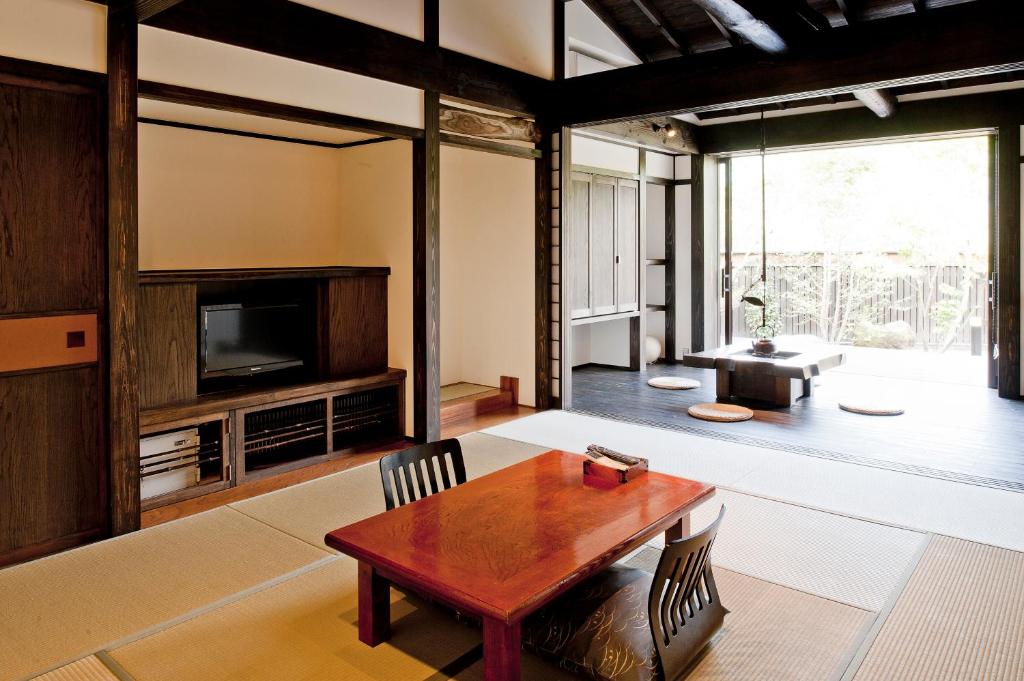
Yamakikan is a compact, history-steeped ryokan in Kawarayu Onsen, established in 1661 and rebuilt on higher ground after the Yamba Dam relocation. The inn preserves reclaimed timber and repurposed storehouses from the old town, creating an interior of exposed beams, antique fittings and garden views. Operating with a small number of guest rooms, the ryokan emphasizes privacy and calm: accommodations range from tatami suites with futons to larger rooms that include an irori-style hearth or a semi-open bathing area.
Bathing facilities combine public and private options: indoor and outdoor communal onsen pools sit beside small landscaped gardens, and a semi-open private onsen can be reserved by guests for short, unhurried sessions. Water is drawn from the local Kawarayu hot springs and the property manages rotation, allowing guest use during stays; the timber surrounds and garden views make it a classic ryokan with onsen in Gumma where bathing is framed as a restorative ritual.
Meals are served in intimate, partitioned dining rooms that reuse an old sericulture house; dinners often feature kamado-style cooking and seasonal local produce presented in courses suited to the quiet atmosphere. Public areas include a book-lined study converted from a storage kura, a relaxed lounge with a fireplace and a self-serve drink corner, while practical amenities include on-site parking and attentive housekeeping. The overall character is low-capacity, traditionally restored hospitality aimed at travelers seeking a rural, culture-focused stay and the chance to sample a ryokan with private onsen in Gumma Prefecture.
Highlights of this ryokan
Detailed Ratings
Points of interest nearby
Review summary for: Yamakikan
Positive Reviews
Private onsen and well-considered bathing options
Multiple guests praised the private onsen and the availability of both indoor/outdoor public baths; private bathing spaces were highlighted as a major benefit and could be booked or used without crowding.
Delicious, substantial meals with local ingredients
Many reviewers enjoyed the food—breakfast and dinner described as tasty, nutritious and generous, often featuring fresh local vegetables and thoughtfully prepared dishes; some noted inclusive drinks with dinner (sake, beer, wine).
Quiet, peaceful location and authentic atmosphere
Guests appreciated the tranquil, remote setting and authentic ryokan feel—small number of rooms, low traffic, traditional buildings and surroundings made stays relaxing and private.
Helpful, friendly service and multilingual reception
Staff were repeatedly described as helpful, accommodating and friendly; at least one guest noted the receptionist spoke excellent English and service around meals was attentive.
Comfortable, spacious rooms and useful guest amenities
Several reviews mention large, comfortable rooms (including tatami areas and kotatsu), cleanliness and well-maintained spaces; guests also liked extras such as 24-hour self-serve drinks, yukata selection and post-bath refreshments.
Negative Reviews
Remote location and access difficulties
Many guests noted the property is remote and best accessed by car; some found it tricky to find and suggested clearer directions or a map pinpoint would help.
Some rooms lack en-suite shower/bath
A few visitors were inconvenienced by rooms without attached bathrooms or showers, which differed from expectations for a ryokan stay.
Inconsistent or awkward self-service elements
Several reviewers found self-service features (a cooking/meal ‘experience’ described as DIY, and the self-serve drink area) awkward or unsettling; suggestions were made to improve layout and flow.
Occasional comfort issues (noise, cold floors, bedding)
Isolated complaints included dripping rain noise at night, cold flooring in the changing area, and dissatisfaction with futon arrangements or duvet cover designs—some guests would prefer staff-prepared futons and simpler bedding aesthetics.
Perceived food/value inconsistencies
While many praised the meals, a few guests felt the cuisine was underwhelming or excessively filling, and one reviewer questioned the overall cost-to-quality balance.
Frequently Asked Questions
Rooms range from small twin rooms for 2 up to family rooms that sleep as many as 6 on futons; the ryokan has a small set of traditional rooms (around eight rooms in total).
Children are not permitted; the property is for adult guests only.
Yes — the ryokan uses natural hot spring water and offers multiple bathing areas, including indoor public baths and an outdoor (rotenburo) onsen.
A private/chartered bath is available for guests and can be reserved or used subject to availability; please request it at check-in or in advance.
The ryokan provides free pickup from Kawarayu Onsen Station if requested in advance within the check-in/out time window; there is no regular airport shuttle so travel via train or taxi from the airport is recommended.
The nearest station is Kawarayu Onsen Station; you can reach the area by limited-express train from Ueno (roughly 2 hours 15 minutes on the express service) with a short local transfer, then use the ryokan’s station pickup.
Staff offer basic English support and the ryokan has some multilingual assistance for common guest needs; notify the property ahead of arrival if you require specific language help.
Meals are traditional Japanese, prepared with local seasonal ingredients and typically served in private dining rooms; the ryokan can accommodate dietary needs if informed in advance.
Local highlights include Azuma (Agatsuma) Gorge, the Maru-iwa rock, and the Yamba Dam area; a car or local taxi provides the most flexible access, while some sites are reachable by local bus.
Check-in is from 15:00 to 18:00 (please advise your arrival time) and check-out is until 10:00; free on-site parking is available, pets are not allowed, and parties or large events are not permitted.