



Ryokan Yoshidaya
8,6/10 Excellent - Based on 129 reviews
Ryokan Yoshidaya sits on the banks of the Ureshino River in the Ureshino Onsen district of Saga Prefecture, blending heritage with contemporary Japanese design. The property is arranged around a main inn and a riverside annex, offering accommodation from tatami rooms to detached villas; several room types feature their own hot spring baths. For travellers seeking private bathing, the ryokan with private onsen in Saga provides both in-room onsen and private baths, enabling a quiet, restorative experience away from the public bathing areas.
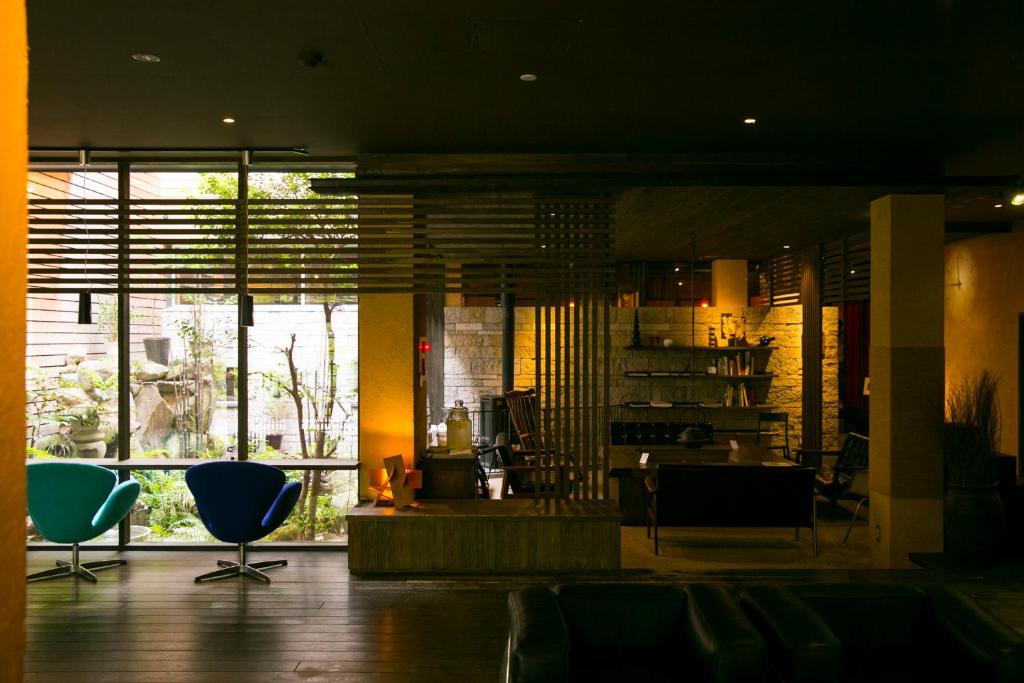
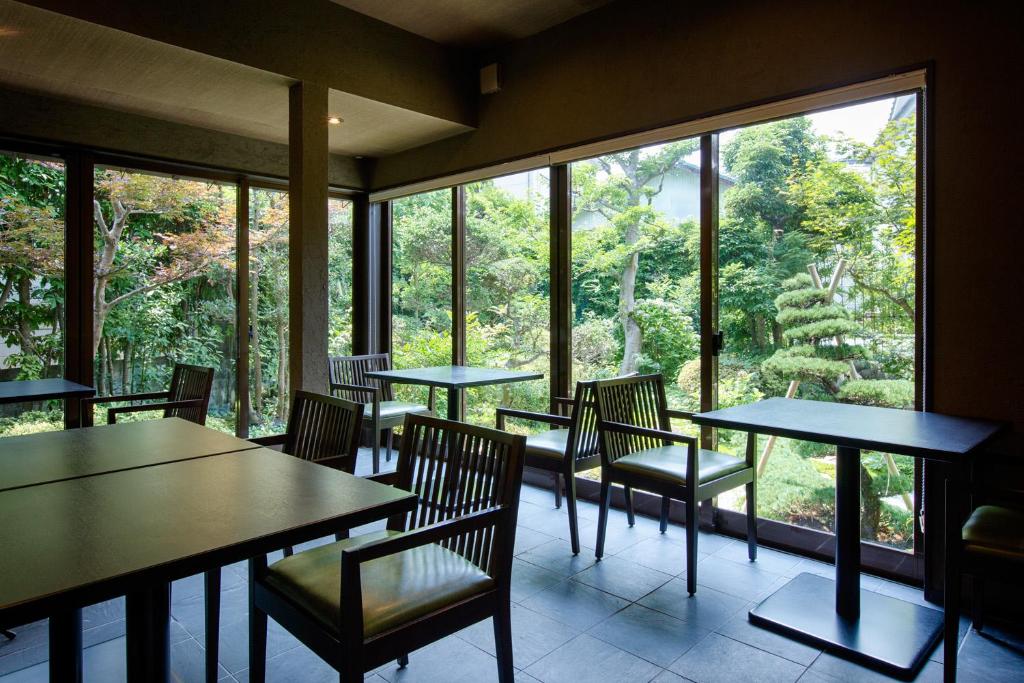
Facilities are layered so guests can tailor their stay: a large public bath complex with indoor and open-air pools, a bedrock-style warm stone bath, and day-use private baths; a café-restaurant and a riverside dining room serving local specialities such as Ureshino yudofu and Saga beef; plus a shop and a footbath salon. Communal spaces include a lounge with an irori hearth and a modern bar-restaurant concept that complements the quieter tea and craft displays. Service is oriented toward attentive, unobtrusive hospitality and local culinary sourcing.
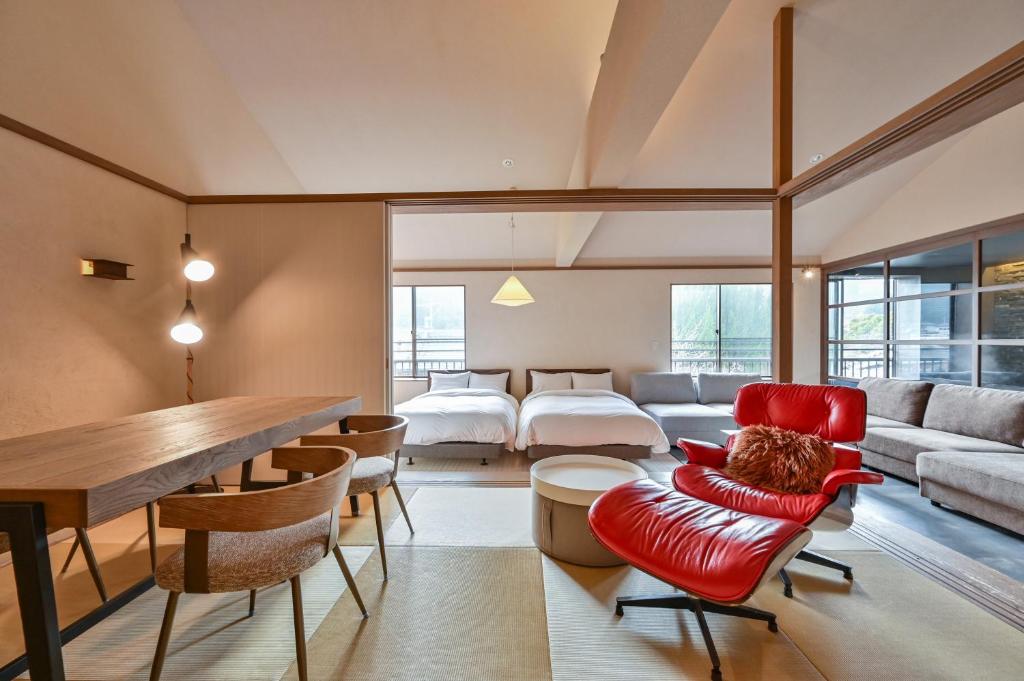
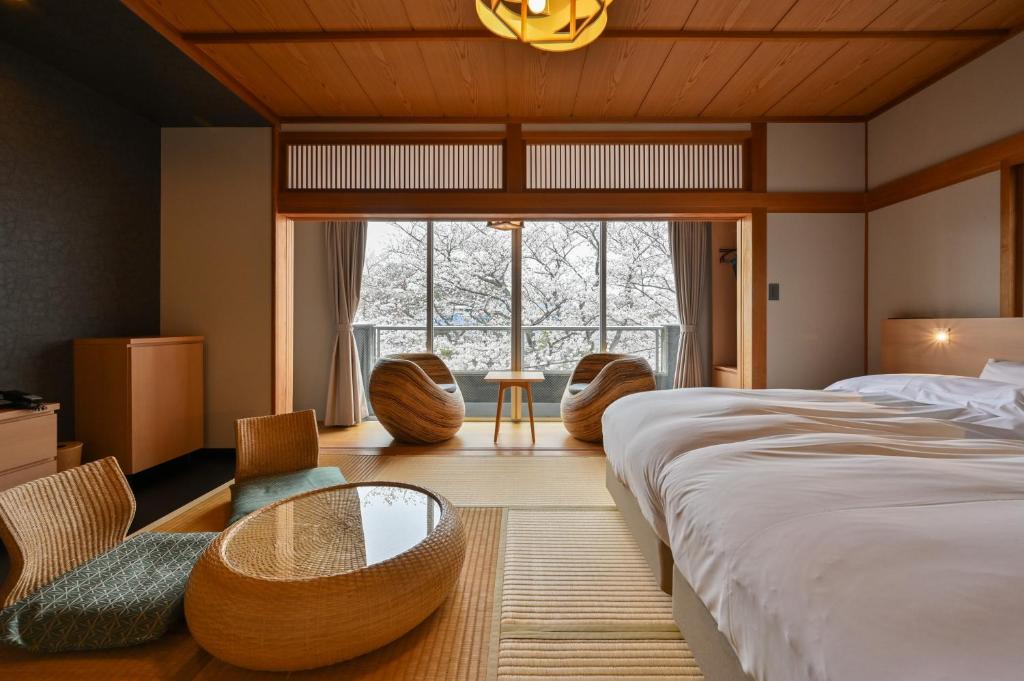
Rooms combine traditional materials and modern comforts with tatami areas, flat-screen TVs and kettles; selected suites add outdoor tubs or indoor ofuro fed by the onsen source. Guests can stroll along the riverside, visit nearby temples and gardens, or link easily to regional transport for wider exploration. Overall, the ryokan with onsen in Kyushu presents a measured, bathing-focused retreat where local cuisine, varied bathing options and considered room layouts come together for a restorative stay in Saga.
Highlights of this ryokan
Detailed Ratings
Points of interest nearby
Review summary for: Ryokan Yoshidaya
Positive Reviews
Exceptional food (dinner and breakfast)
Many reviewers praised the meals as abundant, varied and delicious — dinner courses were generous and breakfast highly rated, with chefs and presentation frequently singled out.
High-quality onsen experience
Guests loved the hot-spring facilities: private in-room onsens, public baths and unique offerings (e.g. bedrock bath) were noted for their water quality and relaxing effect.
Attentive, helpful staff and service
Staff were repeatedly described as friendly, patient and helpful — arranging station transfers, offering thoughtful touches (e.g. anniversary surprise), and using translation tools when needed to assist non-Japanese speakers.
Clean, tasteful villas and relaxing atmosphere
Standalone villas and rooms were described as well maintained, clean and tastefully decorated, providing privacy and a peaceful place to unwind after activities like hiking.
Convenient, scenic location
Reviewers appreciated the location (close to the river and cherry-tree walk), easy taxi access from the station and pleasant morning walks, enhancing the overall stay.
Negative Reviews
Accessibility issues (stairs, narrow entrances, no elevator)
Multiple guests reported steep or narrow staircases, tight room entrances and the lack of an elevator, making access difficult—particularly for older guests, those with mobility issues or travelers with luggage.
Room comfort and climate problems
Some rooms were described as small or having uncomfortable furniture (sofa); others experienced uneven cooling or broken AC leading to a hot sleeping area or the need for extra fans.
Dining logistics and atmosphere concerns
A few reviewers found the dining process inconvenient (having to book dinner only after check-in), dining cubicles with poor lighting/atmosphere, or long intervals between courses during meals.
Occasional service/communication lapses
Isolated reports noted miscommunication about dietary restrictions (e.g. pregnancy-related requests) and occasional staff difficulty accommodating specific guest needs or some language-friction reluctance, despite many helpful staff.
Maintenance and amenity issues
A minority mentioned problems such as public-bath renovation, Wi‑Fi or DVD player failures, high alcohol prices, onsen water supply interruptions (external issue) and small missing conveniences (e.g. bedside storage).
Frequently Asked Questions
Rooms range from twin/tatami layouts for 1–2 guests to larger tatami rooms and villas that sleep up to about 4; check each room’s listed capacity when booking.
Yes — the property offers indoor and outdoor public baths, private in-room hot spring baths in some rooms, and a day-spa facility for treatments.
Public baths are typically open early morning and in the evening (mainly around 06:00–10:00 and 15:00–24:00); day-spa hours vary but generally operate in the afternoon and evening, with weekend schedules extended.
A pick-up service from Ureshino Onsen or the Ureshino interchange is available on request for guests arriving by public transport; Saga Airport is also reachable by about a one-hour express bus.
Staff provide service in Japanese and there is English-language support available for many front-desk and guest-facing services.
Expect modern Japanese-style rooms with tatami and futon options, an irori (hearth) area, local seasonal cuisine, and full access to Ureshino’s hot-spring bathing culture.
Take a train to Takeo Onsen or nearby hubs and transfer to the JR Kyushu bus to Ureshino Onsen (the ryokan is a short walk from the bus stop); check schedules in advance for connections.
Standard check-in begins at 15:00 with final check-in arrangements available on request; check-out is normally at 10:00 — notify the ryokan if your arrival time is different.
Private hot-spring baths are offered in select rooms and there are villa options that provide greater privacy; pets are not permitted at this ryokan.
The ryokan has Japanese dining rooms, a French-style bar-restaurant (Chronicle Terrace) and an on-site café/shop (Kihako); nearby highlights include Ureshino hot-spring town, local Ureshino tea and tofu specialties, Arita porcelain sites, and Huis Ten Bosch within about a 40–45 minute drive.