
Houshi Onsen Chojukan
9,1/10 Exceptional - Based on 221 reviews
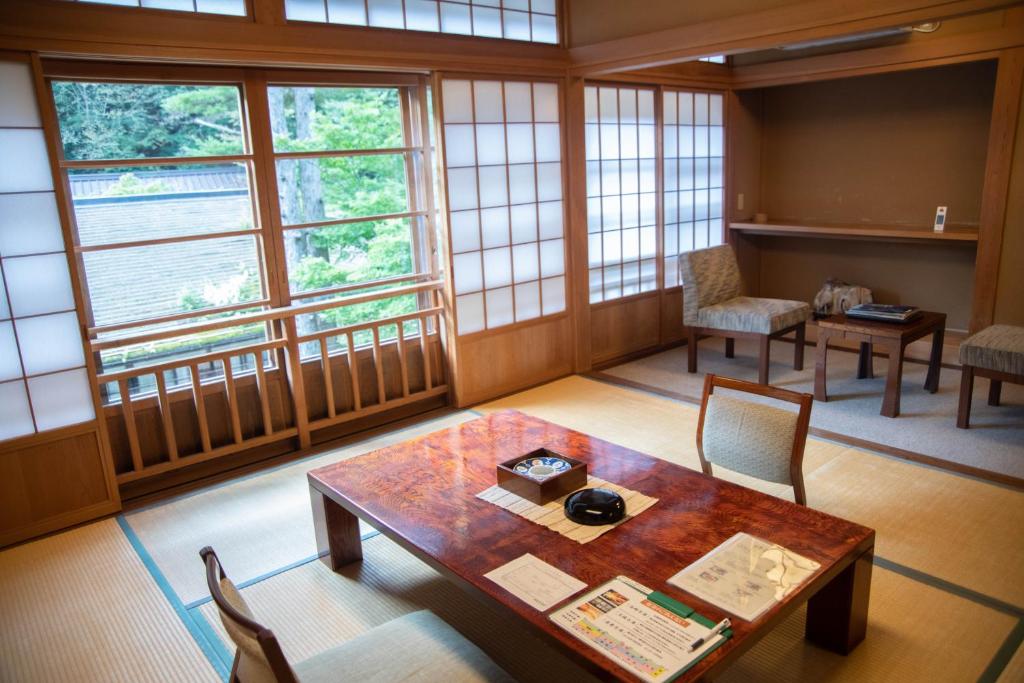
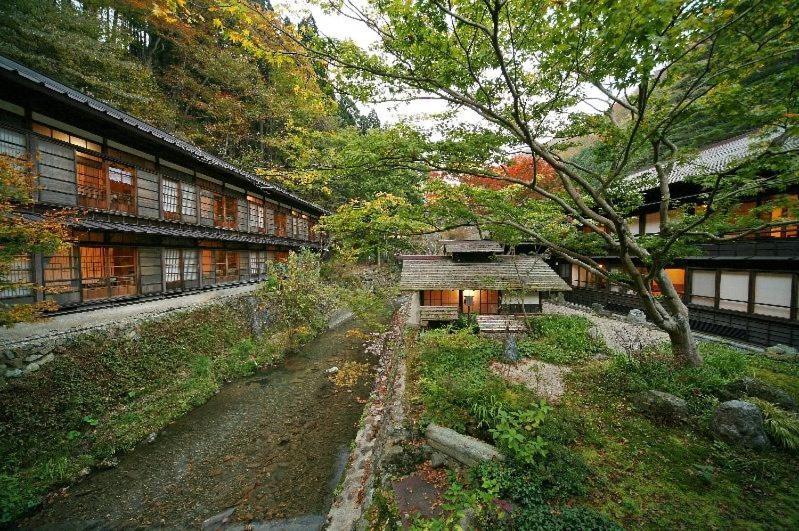
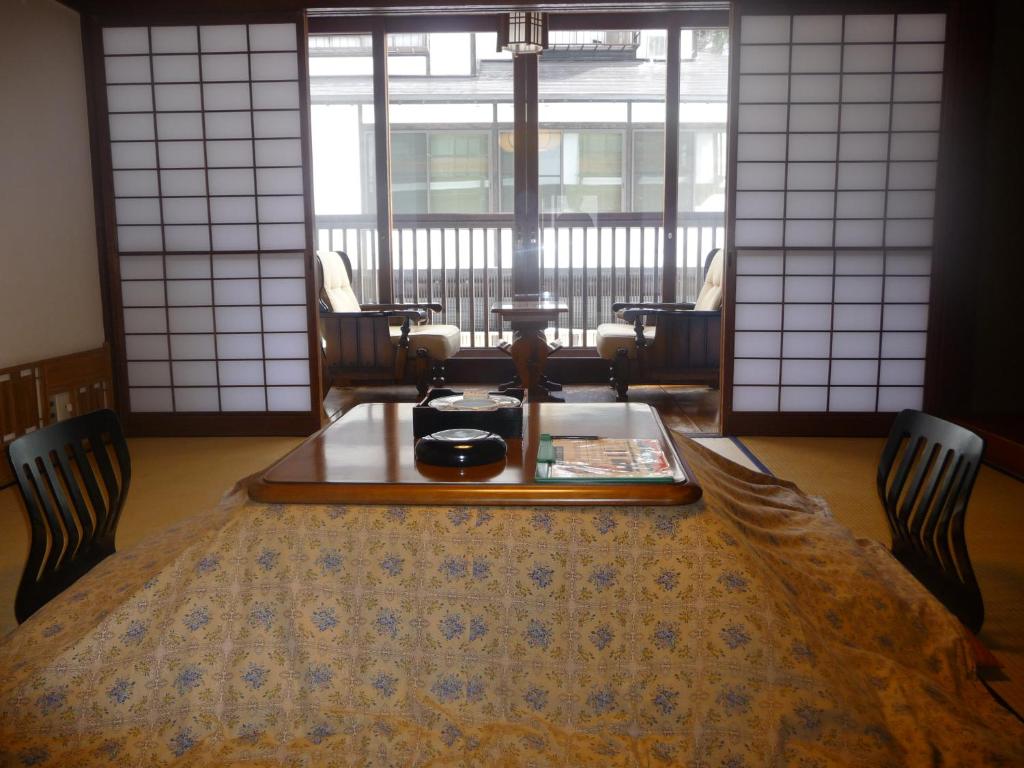
Houshi Onsen Chojukan is a historic wooden ryokan set beside a mountain river in Minakami, offering a deliberately traditional stay that highlights period architecture and quiet seasonal scenery. The property occupies buildings registered as tangible cultural assets and has hosted guests and artists for more than a century; interiors favour tatami flooring, futon sleeping, and simple sitting areas, and guests are provided yukata to move between rooms and the bathing houses. This is a ryokan with onsen in Gumma that leans into an unhurried, restorative rhythm rather than modern hotel conveniences.
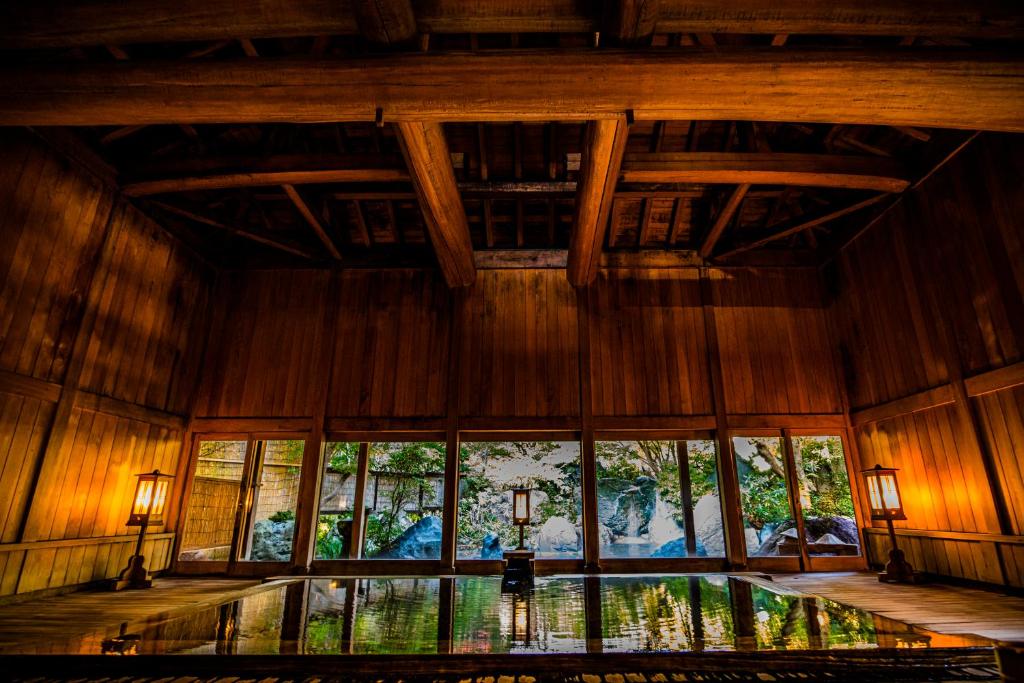
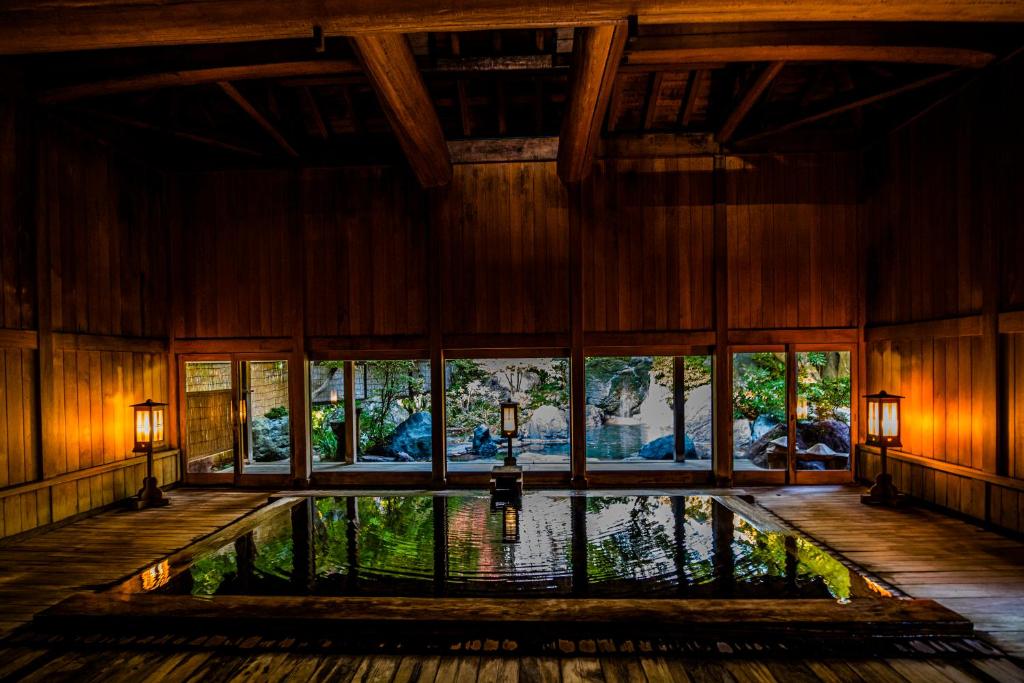
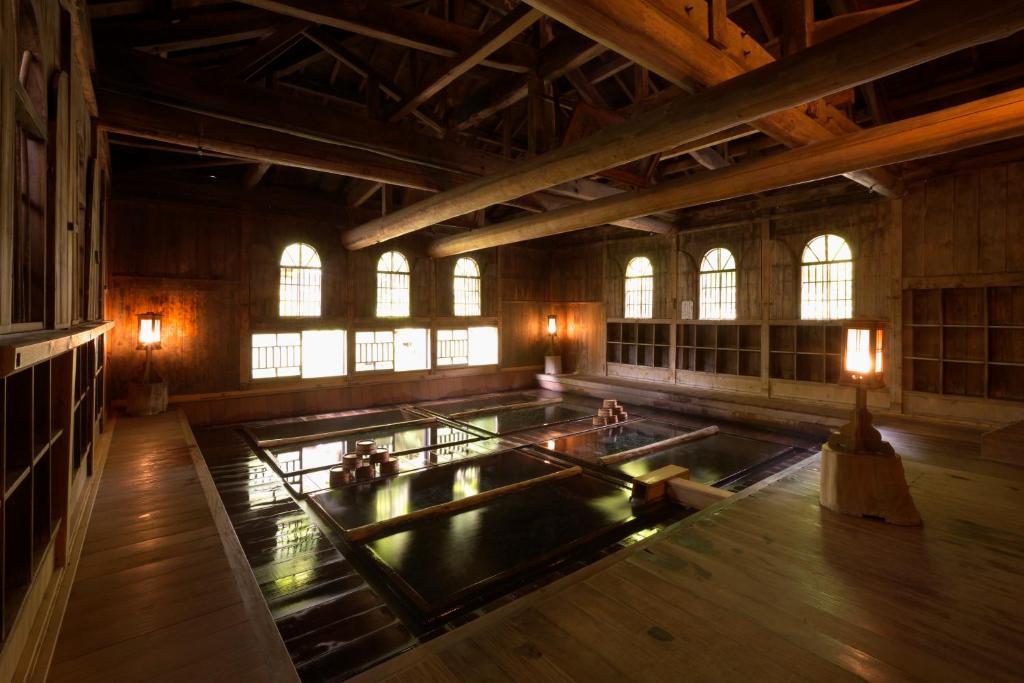
The bathing facilities are the defining feature: three separate spring-fed baths occupy different wooden pavilions, with names and layouts that make each experience distinct—an open-air pool framed by river views, an intimate indoor bath, and a small cascade-style tub—some bathing times open as mixed-gender sessions while others are segregated by sex. The water is drawn directly from local sources and is described in technical records as a mineral-rich, sulfate-type hot spring with a mildly alkaline profile; baths are traditionally managed and operated as communal onsen rather than private en-suite tubs.
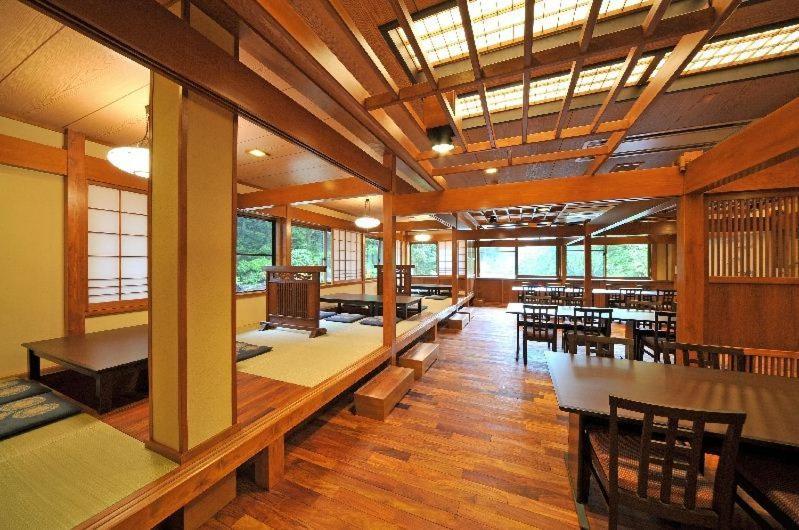
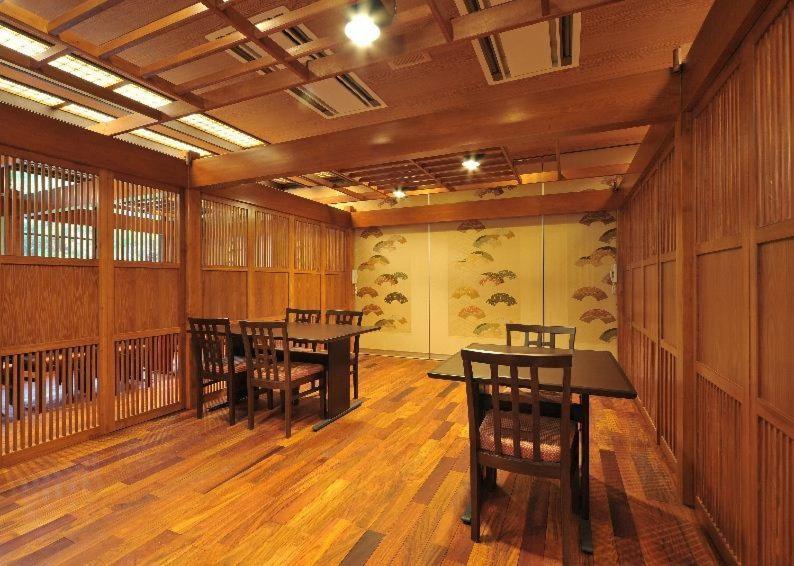
Meals are served in a communal dining room and follow seasonal, regionally sourced preparations that emphasize local vegetables, mountain ingredients, and multi-course kaiseki-style presentation; portions and component dishes reflect Japanese ryokan conventions. The setting is remote, so travel typically involves a scenic drive or local bus connections and guests should expect limited mobile signal and modest Wi‑Fi rather than high-bandwidth service. The ryokan’s character suits travellers seeking an authentic, culturally rooted Japanese onsen stay with historic ambience and carefully maintained communal baths.
Highlights of this ryokan
Detailed Ratings
Points of interest nearby
Review summary for: Houshi Onsen Chojukan
Positive Reviews
Exceptional onsen experience
Many guests praise the baths as the highlight—multiple distinct onsen areas (indoor and outdoor) with pleasant water temperature, beautiful atmosphere and views. Reviewers call the onsen among the best in Japan and describe soaking as relaxing and memorable.
Beautiful, historic traditional property and setting
The ryokan's authentic Meiji‑era architecture, tatami rooms, sliding doors, river and mountain surroundings (snowy scenery mentioned) create a highly atmospheric stay. Guests appreciate the preserved, traditional character and scenic location.
Delicious and generous meals
Most reviewers found the food high quality and well presented, often served in generous portions. Dinners and breakfasts were repeatedly highlighted as a strength and part of the overall experience.
Warm, attentive staff
Staff are described as friendly, professional and attentive. Several reviews note helpful service and at least one mentions an English‑speaking staff member who improved the stay.
Peaceful, restorative atmosphere and access to nature
Guests value the tranquility, restorative feeling and nearby walking/hiking trails. Limited wifi/phone signal was seen positively by some as aiding disconnection and relaxation.
Negative Reviews
Onsen scheduling and mixed‑sex timing inconveniences
Multiple reviewers reported that onsen opening times and switching between men/women/mixed sessions can be odd or restrictive—one guest noted it prevented men from showering during certain hours—so timings may require planning.
Remote location and transport challenges
The property is quite remote; guests mentioned needing to hire a car, take two buses or manage tricky luggage logistics. Access can be time‑consuming and may require planning.
Food can be repetitive or not to every Western taste
A few guests found meals repetitive or heavy for Western palates, and one reported getting sick after a dinner. While many praised the food, some recommend being prepared for traditional multi‑course offerings.
Some areas show age and could use refreshing
Although the historic character is appreciated, at least one guest described parts of the establishment as dark and in need of a refresh, indicating visible signs of age in places.
Minor comfort issues (small bath, bedding, insects)
Several minor grievances appeared: a small third onsen with limited shower space, firm/thin futons or unfamiliar pillows for some guests, and isolated reports of insects in rooms—comfort issues to consider depending on expectations.
Frequently Asked Questions
Rooms are traditional Japanese-style with tatami and futon, ranging from standard rooms to multi-room suites; some rooms suit couples while larger suites accommodate families or small groups — occupancy varies by room, so check the booking page or contact the ryokan for exact limits.
The property features several historic baths including separate main men’s and women’s baths, an outdoor rotenburo, and two reservable private baths for guests who want more privacy.
One of the historic bathhouses operates as mixed-gender bathing at certain times, while the other main baths are gender-separated and private baths can be reserved.
Yes — the ryokan offers two private baths (named Taicho no Yu and Garyo no Yu) that can be reserved; request a booking in advance or ask the front desk on arrival.
Most guests travel via Jomo‑Kogen Station (Joetsu Shinkansen) with a local bus transfer to Hoshi Onsen (total transfer about 30–45 minutes), or drive via the Kan‑Etsu Expressway with roughly a 30–40 minute car journey depending on route and traffic.
Standard check‑in typically begins at 15:00 and check‑out is around 10:30; contact the ryokan in advance if you need an early arrival or late departure.
There is no regular airport shuttle; arrivals are usually by regional bus from the train station or by private car — contact the ryokan ahead of your trip to discuss any special pick‑up requests.
The ryokan provides English information on its website and staff generally speak limited English; they will assist with basic requests, but more complex needs may require simple phrasing or advance arrangements.
Traditional multi-course Japanese meals (kaiseki) are served for dinner and Japanese breakfast is provided; the ryokan can handle common food allergies if notified at least three days before arrival, though they cannot guarantee complete allergen elimination.
Pets are generally not accepted at this traditional ryokan; for supplies, small convenience stores and supermarkets are available in nearby Minakami town, so plan to pick up any specialty items before you arrive.