

Hanakanzashi
9/10 Exceptional - Based on 10 reviews
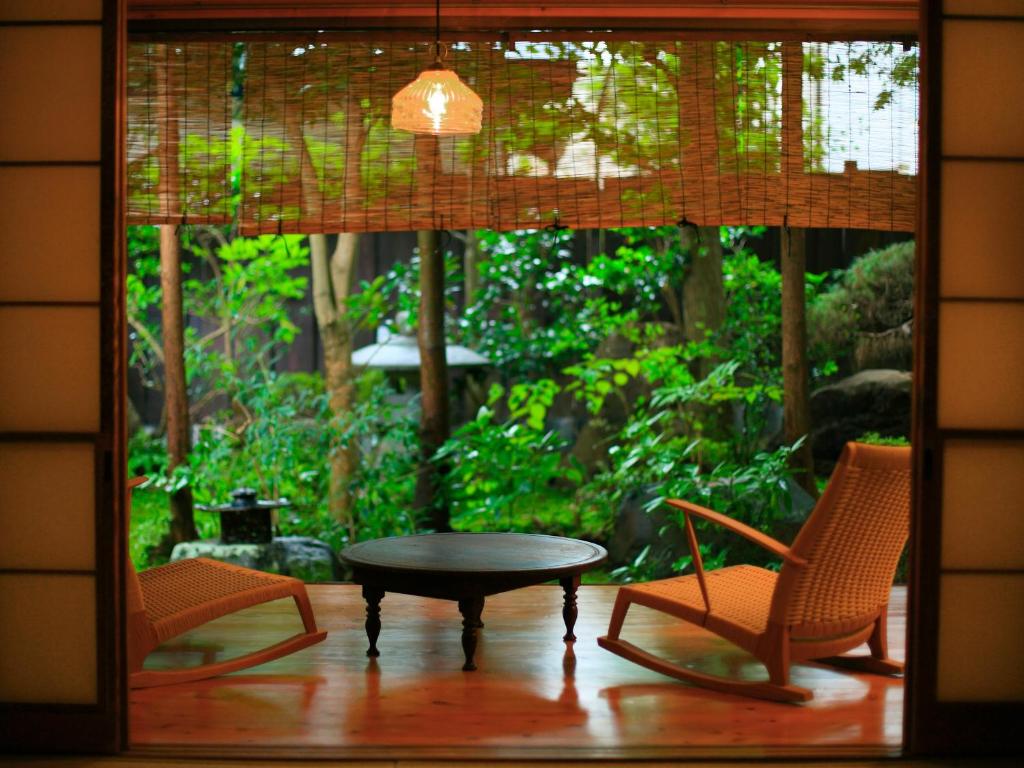
Hanakanzashi is a compact, wood‑framed ryokan set in the foothills of Mount Adatara within Dake Onsen, occupying an early‑Showa building that preserves a nostalgic, tatami‑lined atmosphere. The property has eight guest rooms named after wildflowers and a modest capacity that keeps public areas uncrowded; practical amenities include whole‑house Wi‑Fi, complimentary on‑site parking and a shuttle service on request. The inn currently restricts stays for young children (no guests under 10) and manages arrivals from 15:00 with departures by 11:00, supporting a calm, adult‑oriented pace.
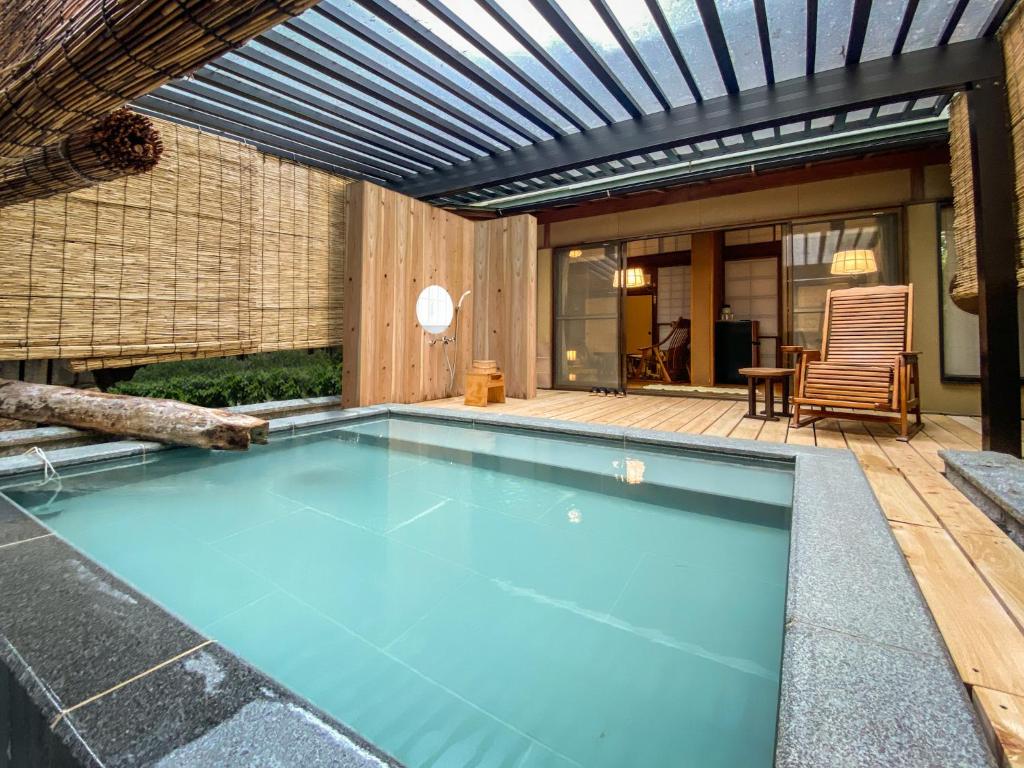
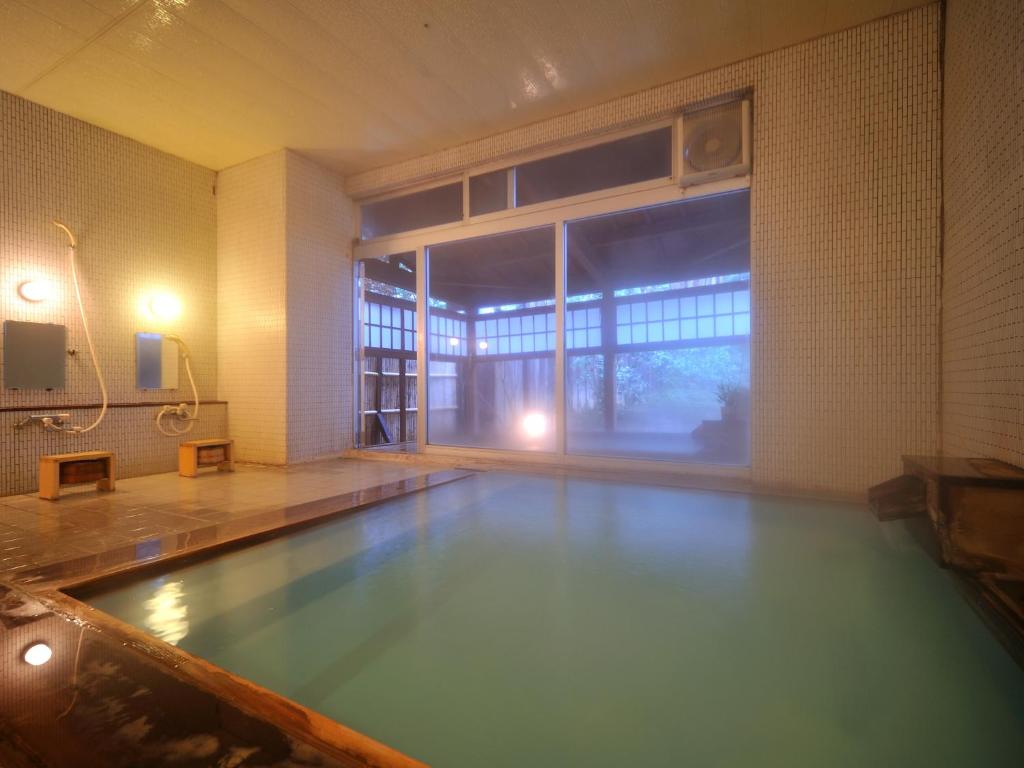
The bathing program is central to the experience: Dake’s springs are a relatively uncommon simple acidic source and the ryokan emphasizes source‑fed bathing (gensen kakenagashi) across its facilities. Hanakanzashi operates two public baths with time‑based gender rotation and an open‑air bath, while several room types feature private outdoor tubs, so the property functions as both a ryokan with onsen in Dake Onsen and a ryokan with private onsen in Fukushima. A small sauna, a relaxed common lounge and post‑bath tea service round out the bathing offering.
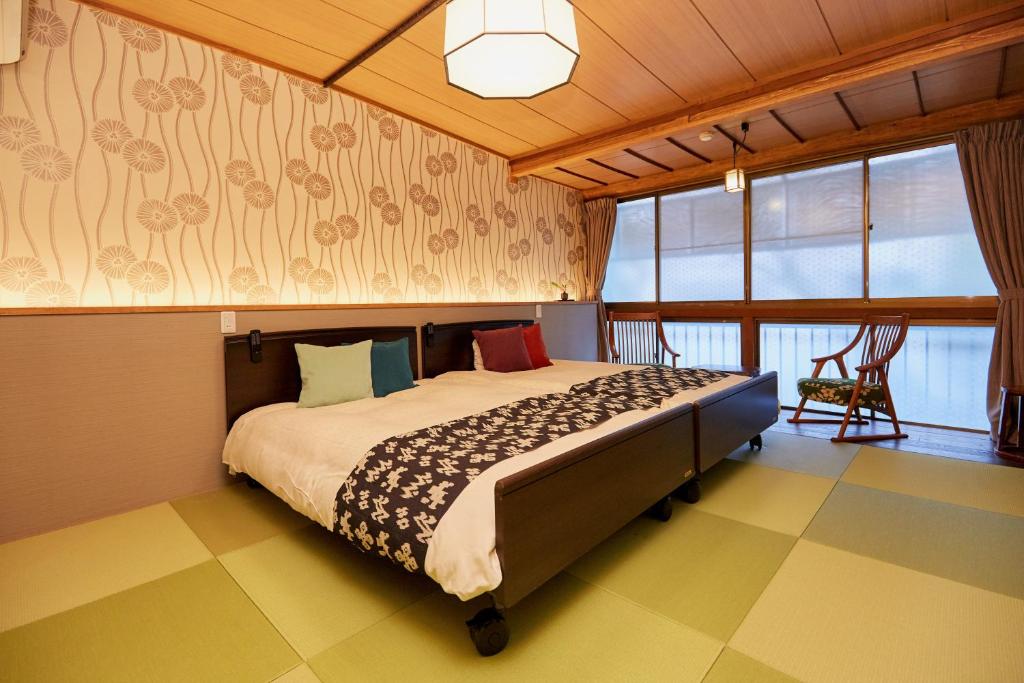
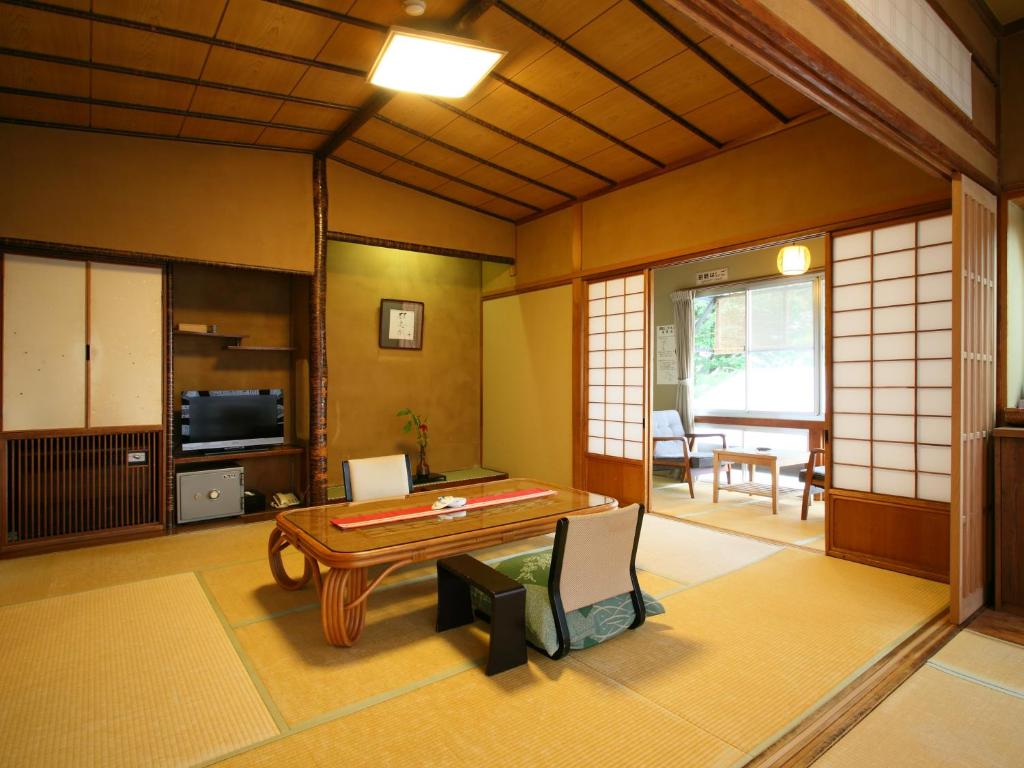
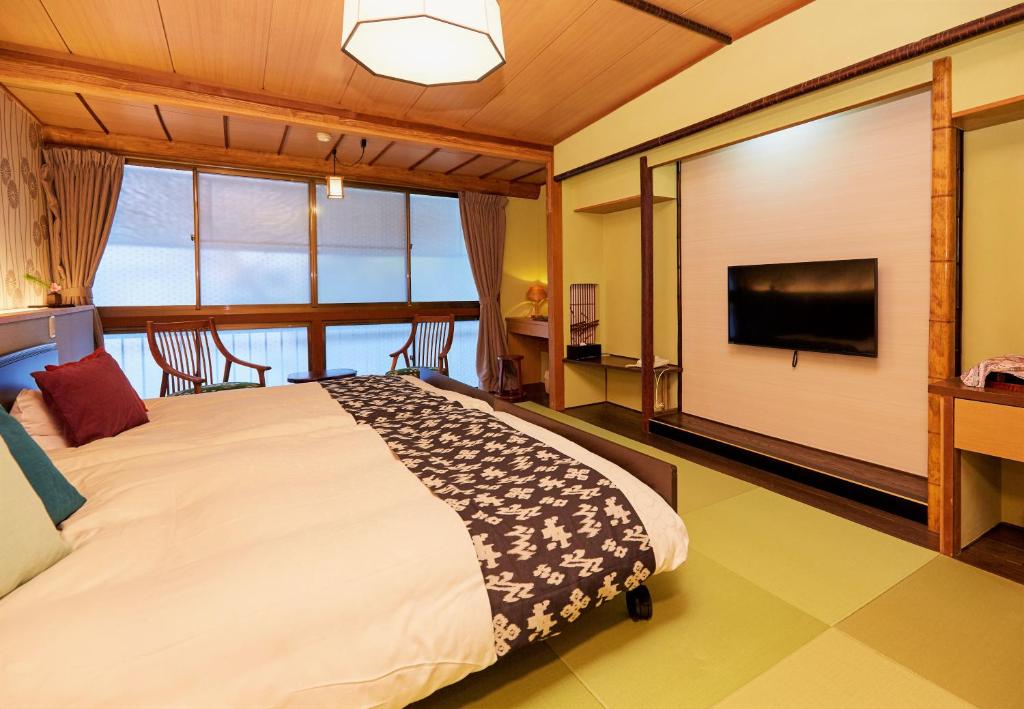
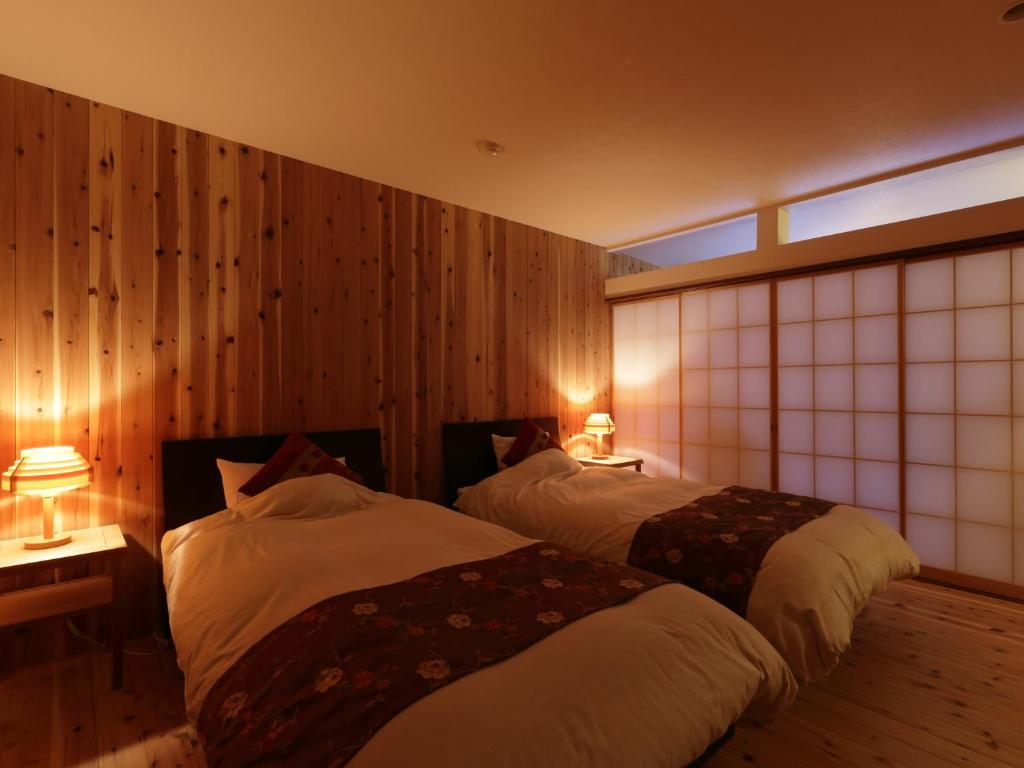
Food is built around seasonal, regional ingredients, with most meals served in the dining room and in‑room service generally available for parties of two; breakfasts are presented in a Japanese/Asian style. Rooms combine traditional tatami areas with modern conveniences such as electric kettles and optional Western beds in hybrid layouts. Located within the Dake Onsen cluster and reachable by local bus or a short drive from regional rail, the staff can assist with directions and local walking routes to help plan time in the surrounding foothills.
Highlights of this ryokan
Detailed Ratings
Points of interest nearby
Review summary for: Hanakanzashi
Positive Reviews
Excellent onsen with atmospheric outdoor bathing
Guests consistently praised the onsen as very good and soothing; the outdoor bath (where available) was described as atmospheric and the post‑bath tea was appreciated.
Delicious, locally focused cuisine
Dinner and breakfast were noted for variety and use of local ingredients—rice and steak were singled out as particularly tasty—leaving guests very satisfied.
Warm, attentive staff and efficient service
Staff were described as friendly, engaging and well‑trained; check‑in was quick and accurate, staff offered photos and pleasant interaction that enhanced the stay.
Clean, well‑kept traditional atmosphere
Although the building is older, guests found it very clean and well maintained, with a pleasing traditional ambiance, a lovely courtyard visible from the lobby, and attractive antique lighting.
Comfortable communal amenities and good drink selection
Common spaces such as a free‑drink area en route to the onsen were seen as comfortable; guests also appreciated the wide selection of sake and other thoughtful amenities.
Negative Reviews
Some bathing areas lack an outdoor bath
At least one guest was disappointed that one of the baths did not include an open‑air (rotenburo) option.
Occasional drainage problem after heavy rain
A guest reported the morning bathing area experienced clogged drainage following heavy rain, which affected their bath experience.
Broken soft‑close toilet seat in a room
A room's toilet seat soft‑close mechanism was broken and closed abruptly; guests suggested repairing or replacing it to reflect attention to detail.
Creaky corridor raises noise concerns
The wooden 'uguisu' corridor creates a pleasant atmosphere but can be noisy to walk on, leading guests to worry about disturbing other rooms.
Limited/comms issues around complimentary drinks
Some guests mentioned limited quantities of complimentary alcohol/wine or regretted not using a sake‑tasting coin, suggesting clearer communication or slightly more generous offerings could improve the experience.
Frequently Asked Questions
Room capacity varies by type — options range from intimate twin rooms to traditional Japanese rooms with up to six futons; the property has eight rooms and a total capacity of about 28 guests.
Yes — the ryokan uses the local acidic hot spring, with two public baths (gender-switched at set times), an open-air bath, and some rooms offering private open-air baths.
Yes — a complimentary shuttle operates between Nihonmatsu Station and the ryokan on prior reservation (request at least three days before arrival); published times are roughly 15:10 departure from the station and 10:20 return from the ryokan.
Fukushima Airport is the closest at roughly 50–60 km; the usual route is airport → train or taxi to Nihonmatsu (or Koriyama) then the ryokan shuttle or a short taxi ride to Dake Onsen.
Staff primarily operate in Japanese and English support may be limited; guests with specific needs are advised to contact the ryokan in advance.
Meals focus on seasonal, locally sourced Japanese cuisine (multi-course kaiseki); two-person stays may be served in-room while larger parties dine in the ryokan’s dining area, and the atmosphere emphasizes Taisho-era wooden architecture and traditional hospitality.
The ryokan sits in the Dake Onsen area; regional highlights within driving distance include Nihonmatsu and outdoor destinations such as Mount Bandai and nearby Koriyama for day trips.
Take the train to Nihonmatsu Station and use the ryokan’s reserved shuttle or a taxi (approximately a 15–25 minute road transfer); buses also serve the Dake Onsen area from the station.
Check-in begins at 15:00 and check-out is generally by 11:00; the ryokan offers luggage storage for guests before check-in or after check-out.
Some rooms have private open-air baths and the ryokan offers information about reservable private bathing where available; pets are not permitted, and there are convenience shops in the town and at nearby stations — staff can point you to the nearest supermarket or store.